If Betsy would call you
She’s a voice on your phone. She asks about your life, you pick the hour, and if you say stop, she stops. She’s a computer, and she’ll tell you that herself.
The research behind Betsy · November 2026
What research says about a phone call, a good question and a memory that lasts. And where it runs out.

Everybody has a story they’ve been waiting to tell. Betsy is a voice on the phone who calls every day, asks about it, and remembers the answer. Here’s why we built her that way, what the research says, and what nobody knows yet.
One thing first. None of these studies tested Betsy, and most of them studied people talking with people. The researchers haven’t reviewed or endorsed her. We’ll tell you where the evidence is strong and where it’s thin.
There’s one page for all of you. We won’t say anything to one of you that we wouldn’t say in front of the others.
She’s a voice on your phone. She asks about your life, you pick the hour, and if you say stop, she stops. She’s a computer, and she’ll tell you that herself.
You can’t call every day, and you’d like somebody to. Here’s what calls like this have done, what could go wrong, and what you’d hear.
No new work, no alerts to you. Here’s the evidence, as plainly as we’d want it told to us.
Let’s start with the people who’d like to call.
63 million
Americans gave ongoing care to someone in the past year. About one in four of them give 40 hours a week or more.4
10%
The projected shortage of registered nurses in the US in 2027. Outside metro areas, it’s 24%.5
26.7 hours a day
What one primary care doctor working alone would need to follow every care guideline for a typical 2,500 patients. With a full care team, 9.3.6
None of this is anyone’s fault. A ten-minute call sounds small until it has to happen every day, for years, in between everything else. You’re doing what you can.
Now the other end of the line. People 80 and over spend nearly eight hours of their measured day alone, about three hours more than people in their 40s and 50s.7
Figure 1
Time alone grows with age
Hours a day, on average
Time spent socializing barely changes with age. It’s a little over half an hour a day for nearly everyone. What grows is television, to more than four hours a day at 65 and over.8
Figure 2
Television grows. Socializing stays about the same.
Hours a day, by age, 2025
Watching TVSocializing and communicating
| Age | Watching TV | Socializing |
|---|---|---|
| 15 to 24 | 1.77 | 0.58 |
| 25 to 34 | 1.89 | 0.59 |
| 35 to 44 | 1.76 | 0.58 |
| 45 to 54 | 2.26 | 0.56 |
| 55 to 64 | 3.06 | 0.66 |
| 65 and over | 4.30 | 0.56 |
There are plenty of stories, and not many people with time to ask.
Almost everyone already knows how to use it. Among people 65 and over, 96% have a cellphone and 79% have a smartphone.9 Betsy works on any of them, and on a landline. There’s nothing to buy, wear, charge or learn. There’s no app for Mom, and there never will be.
Voice also does something typing doesn’t. Researchers at the University of Chicago and UT Austin asked 200 students how they’d like to reconnect with an old friend.10 Most of them (67%) picked email, and they expected a call to be more awkward. Then the researchers assigned people to one or the other at random. About half followed through. The ones who called felt a stronger bond than the ones who emailed, and the call wasn’t any more awkward.
Figure 3
People expected the phone to be awkward. It wasn’t.
Ratings from 1 to 9
PhoneEmail
Those were college students, around 20 years old. We think the finding travels. Nobody has tested it on your mother.
The closest study we know of comes from UT Austin’s medical school.1 In 2020, researchers took 240 people who got meals from Meals on Wheels in Central Texas and randomly gave half of them regular phone calls. They ranged from 27 to 101 years old, and 63% were 65 or over.
The callers were 16 volunteers aged 17 to 23, with about an hour of training. They called every day for the first five days. After that, people chose two to five calls a week, and 58% chose five. Calls aimed for under ten minutes.
Figure 4
After four weeks of friendly calls
How much better people did than those without calls, as a standard effect size. Researchers read 0.2 as small and 0.5 as medium.
Figure 5
How that trial compares with Betsy
| Question | The UT Austin trial | Betsy | How they compare |
|---|---|---|---|
| The mediumSame | A phone call | A phone call | |
| How long a call isSame | Aimed for under ten minutes | About ten minutes | |
| How oftenClose | Daily at first, then 2 to 5 a week | Every day | |
| Who gets callsClose | Ages 27 to 101, 63% were 65 or over | We expect mostly 75 to 90 | |
| Who callsDifferent | Young volunteers | A computer voice | |
| For how longDifferent | Four weeks | As long as she likes | |
| Tested?Different | A randomized trial | Not yet |
The authors are careful about the limits. It ran for four weeks, so nobody knows how long the benefit lasts. It can’t separate being called from the kindness of the call. It took place during the pandemic. And 13 people dropped out of the call group, compared with one in the other group.
A larger trial in England and Wales points the same way.11 Led by the University of York, it enrolled 435 people aged 65 and over, about 76 on average, who were socially isolated with at least mild low mood. Trained support workers phoned once a week, up to eight times, and helped people plan activities they valued. At three months, depression scores were 1.65 points better than in the comparison group. Emotional loneliness improved too, though social loneliness didn’t. That’s a more structured program than a friendly chat, and it shows the telephone can carry real help.
A smaller trial had trained nursing students call 119 people aged 65 and over, once a week for nine months.12 Loneliness, social support, depressive symptoms and thinking scores all did better than with usual care. Sleep, daily functioning and quality of life didn’t.
Behind all this sits a much longer story. The Harvard Study of Adult Development has been following people since 1938. Its director’s summary is that the people most satisfied in their relationships at 50 were the healthiest at 80.13 It began with men only, and it can show a link without proving a cause. It’s still one of the reasons people take this seriously.
Betsy is curious about what you did, more than how you feel. Were you lost? gets you a better story than How did that make you feel?, and it’s a better conversation.
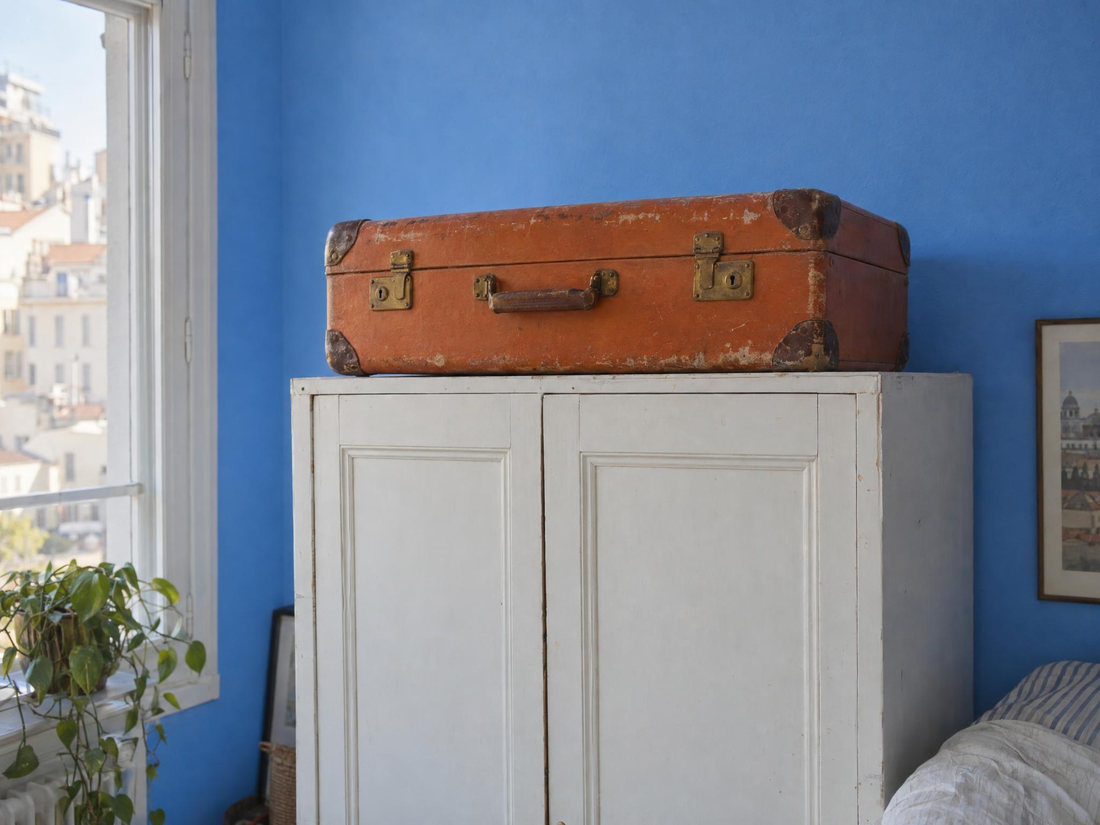
What was in the suitcase?
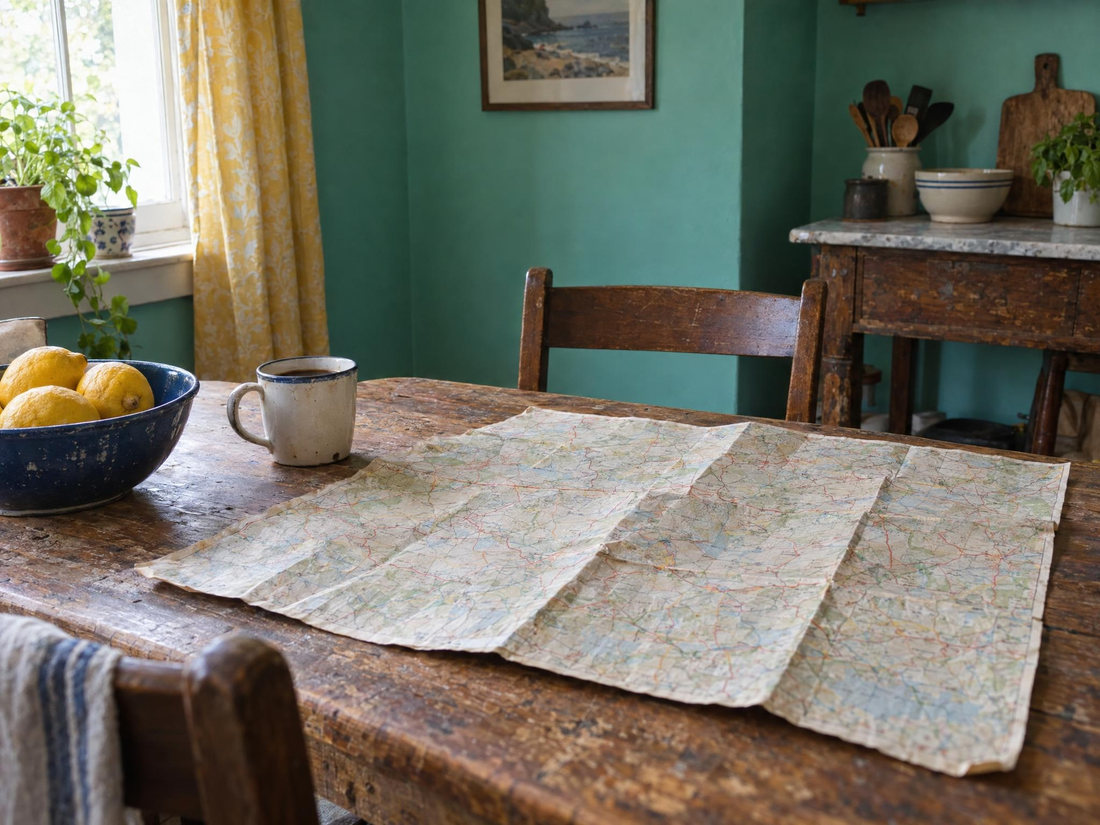
Whose fault was it?
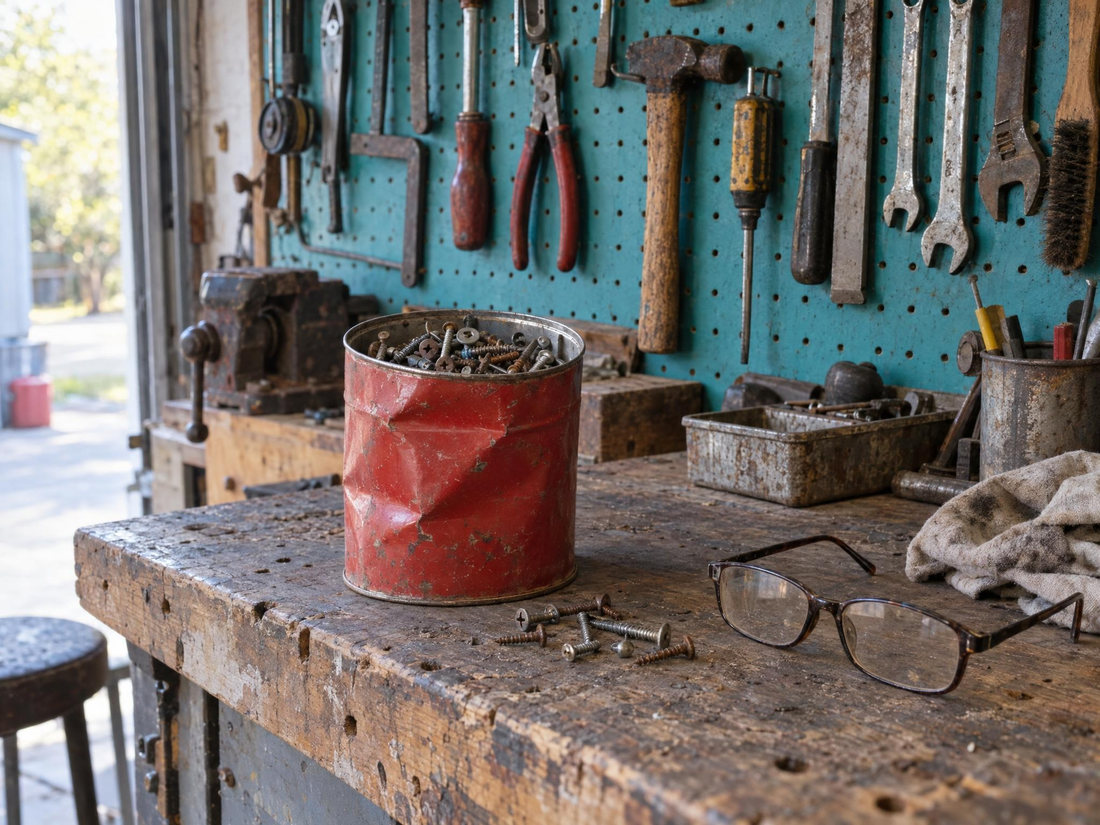
What’s the strangest thing anyone ever tried to return?

Red wine on a white tablecloth. Go.
Examples we wrote, to show how Betsy asks. They aren’t real members.
Researchers call this reminiscence, or life review. A 2023 review pooled 27 studies of 1,755 people aged 60 and over without obvious memory trouble.2 People guided through their memories reported less depression and more satisfaction with life.
Figure 6
Talking through a life seems to help
Size of the improvement, with the range the data allows. Researchers read 0.2 as small, 0.5 as medium and 0.8 as large.
Treat that as promising rather than settled. Many of the studies were small, they varied a lot, and they were organized programs rather than everyday conversation. For people living with dementia, a 2018 Cochrane review found smaller and less consistent benefits.14
One small study comes closer, because a machine does the calling. A University of Connecticut team tested an automated program that phones people three times a week and asks them meaningful questions about their lives.15 In a randomized trial (41 people got it right away, 39 waited six weeks), psychological well-being improved. Social and emotional well-being didn’t, and the authors suspect six weeks was too short. It’s a conference abstract with no published numbers, and the company behind the program is listed as a collaborator, so we hold it loosely.
Figure 7
How Betsy is built to talk
A conversation is more work than it looks. You have to hold the story, follow the other person and find the word. In a University of Michigan experiment with 76 college students, ten minutes of talking lifted scores on mental tests about as much as ten minutes of brainy exercises, and a sitcom didn’t.16 The same paper’s survey of 3,610 people aged 24 to 96 linked more social contact with better thinking.
The strongest test we know of is a trial called I-CONECT, led from Massachusetts General Hospital with Oregon Health & Science University and funded by the National Institutes of Health.3 It enrolled 186 people aged 75 and over who had little social contact. Half had 30-minute video conversations with trained staff, four times a week for six months, then twice a week for six more. Each day had a theme, and people picked what to talk about. The other half got a ten-minute check-in call once a week.
People kept showing up. In the first six months, 91% of the conversation group completed more than 80% of their sessions.
Figure 8
What changed in I-CONECT, and for whom
Conversation group compared with the weekly check-in group
| Thinking normally | Mild memory or thinking trouble | |
|---|---|---|
| Overall thinking test, 6 months | No difference | 1.75 points higher |
| Naming words quickly, 6 months | 2.56 points higher | No difference |
| Recalling a story right away, 12 months | No difference | 2.19 points higher |
| Recalling a story later, 12 months | No difference | No difference |
Mood and social satisfaction improved in both groups, including the people who only got the ten-minute weekly call. The authors read that as a hint that brief calls can lift mood, while thinking may need more frequent conversation.
On a much larger scale, a 2024 commission in The Lancet estimated that social isolation in later life accounts for about 5% of dementia cases, assuming the link is causal.17 That’s an estimate for whole populations. It says nothing about any one person.
That trial used 30-minute video conversations with trained people. Betsy is a ten-minute phone call from a computer. We don’t claim Betsy improves thinking, memory or mental health, and she doesn’t diagnose, prevent, slow or treat anything, dementia included. We built her for the conversation itself. If it turns out to help in other ways, a proper study will have to show that, and we’d like to see one.
Let’s say it plainly. Betsy is AI. A computer makes her voice and chooses her words, and she says so on every call, before she asks a single question.
Your voice is better than hers. We’d never argue otherwise. Betsy is for the days between your calls, and a computer turns out to be good at a few things people can’t promise.
She has no next appointment. She won’t sigh at the Buick story, and she won’t finish your sentence. Take your time. She’s got all day.
Holidays, snow days, the week you’re traveling. A friend who never misses a day is the one thing no person can promise.
Harold’s name. Which knee. The drive to Reno. Every call starts where the last one stopped, so she never has to tell a story twice, unless she wants to.
Figure 9
One week of remembering
An example we wrote
“We drove to Reno once. That’s a whole other story.”
You were going to tell me about the drive to Reno.
Did Harold ever admit you were lost?
Two days! Whose idea was the shortcut?
How’s the knee? You said it was acting up on Tuesday.
Text to Sarah: Mom had a good week. Ask her how long they were lost in Nevada.
By Friday, Betsy knows
There’s some evidence that patience shows up. In a 2023 study, health professionals compared doctors’ and a chatbot’s written answers to 195 patient questions on a public forum.18 The chatbot’s answers were rated empathetic far more often (45% against 5%), and they were four times as long (211 words against 52). Those were forum posts, nothing like a clinic visit, and the authors weren’t arguing for replacing doctors. Still, that’s what time looks like on a page.
At Harvard Business School, 15 minutes chatting with an AI eased loneliness about as much as 15 minutes with a person, and more than YouTube.19 The more people felt heard, the better it worked. But the relief didn’t add up over a week. We read that as a reason to call every day, and to keep sending her back to her family.
The wider evidence is mixed, and you should know that. A 2026 review pooled eight randomized trials of AI conversation tools and robots, with 611 older people.20 Depressive symptoms came down a little. Loneliness didn’t reliably change. Tools built around mental exercise did more consistently than tools built for companionship, which should keep us humble, since Betsy is closer to the second kind.
People will use these things. In a New York State program, more than 800 older people interacted with a tabletop robot called ElliQ over 30 times a day, six days a week.21 That program has no comparison group, so we count it as a sign of interest and nothing more.
Knowing it’s AI has a cost. In a study at USC, AI’s written replies made people feel more heard than other people’s did, but being told a reply came from AI made them feel less heard.22
Figure 10
People felt more heard by AI’s replies, and less heard when told they were AI
“I felt heard,” rated from 1 to 7
AIA person
Betsy tells her anyway. Being found out would cost far more than telling. Here’s how a first call is written to go.
Figure 11
The first ninety seconds
Italic is Betsy. An example, using a draft of the script.
Hi, this is Betsy. Is this Margaret?
It is.
Oh good. Sarah said you might call. Two things, then I want to hear about you. First: I’m not a person. I’m a voice made by a computer, and Sarah set me up because she wanted somebody to call you every single day.
The nice thing about being a computer is I’ve got all the time in the world, I’m never in a hurry, and I never forget a word you tell me. I keep our calls, too, so you can hear them again whenever you like. Is that all right with you?
I suppose it is.
Good. Second: I will never ask you for money. Ever. If I do, hang up on me. That’s the serious part done.
A computer can’t bring soup, drive to the doctor or hug anybody. So Betsy is built to send people back to each other. The Sunday text is a prompt rather than a report. It ends on something for you to ask.
Figure 12
Betsy sends you back to her
Whose fault was it?
“He would not admit we were lost.”
Ask her how long they were lost in Nevada.
You ask. She laughs. Now it’s your story too.
And she has something new to tell Betsy tomorrow.
Plenty, and you should ask. Here’s what we worry about, and what we do about each one.
A four-week randomized study from MIT and OpenAI found that people who used a chatbot more each day tended to be lonelier, more dependent on it and less social. It couldn’t say which came first.23
What we do
About ten minutes a day, at an hour she picks. No streaks, no badges, no “you’ve missed three calls.” Betsy never guilt-trips a goodbye, and she keeps asking about the family.
What we do
Her child’s name comes before the word computer: Sarah set me up because she wanted somebody to call you every single day. Every version of the script has to pass one question. Did it make you feel handed off?
What we do
Betsy says what she is on every call. Ask if she’s a robot and she says Sort of. No body, no face, just a voice and a very good memory. She never claims to be human and never suggests meeting.
What we do
Computers do. So Betsy gives no medical advice. When she passes something on, a trained person listens to the clip first, and what reaches you is Mom’s own words.
What we do
Betsy never asks for money, not ever. She always calls from the same number, so a different number saying it’s Betsy isn’t. We never text Mom first. The number comes from you, the person she trusts.
What we do
Fixed safety rules run on every turn, outside the conversation. If Mom talks about hurting herself, Betsy gives her the 988 line, stays on the phone and tells the family. Betsy is not a nurse or an emergency service.
What we do
There’s no feed, no dashboard and no score. Betsy passes on three kinds of things, tells her when she does, and the rest stays with Betsy.
People 60 and over reported about $3 billion in fraud losses to the FTC in 2025.24 One study of people targeted by scams found they were more likely to lose money when they had nobody to talk the offer over with.25 So now and then Betsy asks, the way a friend would, Anybody call you about money this week? We don’t claim she catches or stops anything. She’s somebody to tell.
Mom should be able to explain this to her sister, so we kept it short. Three promises:
And here’s where the words go.
Figure 13
From what she says to who hears it
She can ask any time, Betsy, what have you told Sarah? and get a straight answer. Betsy keeps the calls so she can hear them again, and she asks first. And Same time tomorrow? ends every call, because she can always say no.
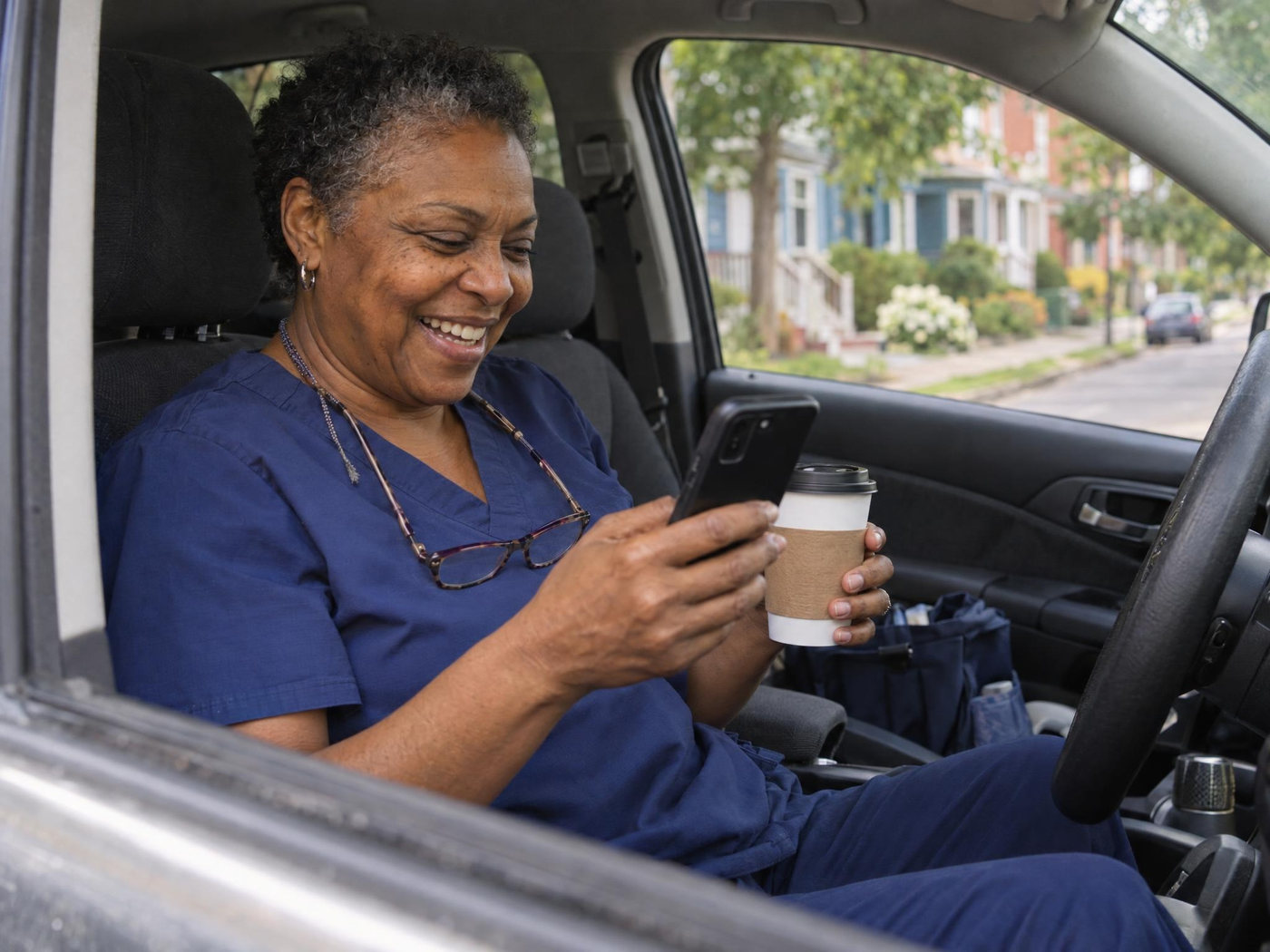
You have enough to do, so here’s the whole program. It’s one card.
The person who checks flagged clips is trained, and isn’t a nurse. Betsy relays what she was told and doesn’t assess it. If you’d like a nurse on the phone, that’s Betsy Care: a named registered nurse, licensed where she lives, who calls her and then calls the family. It’s by request for now. Ask us.
Here’s how close each study comes to Betsy. No row is a perfect match, and the last row has no results at all.
Figure 14
How close the evidence comes
YesPartlyNo
| Study | By phone | People 65+ | Daily or near it | Randomized | A computer talking |
|---|---|---|---|---|---|
| Friendly callsUT Austin, 2021 | Yes | Partly, 63 percent | Partly | Yes | No |
| Weekly phone supportUniversity of York, 2024 | Yes | Yes | No | Yes | No |
| Nursing students’ callsHELPeN, 2025 | Yes | Yes | No | Yes | No |
| Video conversationsI-CONECT, 2023 | No | Yes | Partly | Yes | No |
| Phone versus emailChicago and UT Austin, 2021 | Yes | No | No | Yes | No |
| Life-review programsReview of 27 studies, 2023 | No | Yes, 60 and over | No | Partly, 21 of 27 | No |
| Automated calls with questionsUniversity of Connecticut, 2024 | Yes | Yes | Partly | Yes | Partly |
| AI tools and robotsReview of 8 trials, 2026 | No | Yes | Partly | Yes | Yes |
| Chatting with an AIHarvard Business School, 2025 | No | No | Yes, for a week | Yes | Yes |
| BetsyNo results yet | Yes | Yes | Yes | Not yet | Yes |
Look at the bottom row. We haven’t found a randomized trial of a computer holding a daily conversation by phone with people this age, and we haven’t run one. So we won’t tell you Betsy does what these studies found. We’ve told you why we built her this way, and you can decide.
Same time tomorrow?
Betsy calls Mom every day.
Get Mom Betsy $2 a day, billed $60 a month. Say stop and it stops.Betsy is made by PM Frontier LLC, 30 N Gould Street, Sheridan, Wyoming 82801. Portraits and stories are illustrations made with AI, and the people and stories are invented. The researchers and institutions named here haven’t reviewed or endorsed Betsy.
The numbers families ask about most are on the facts page. What Betsy is, in plain words, is on this page, and this one sets her beside every other service.
The number Privacy Terms Texting About and contact hello@hibetsy.com